


K-LOVE
4.66.36K Reviews
App Specs
- Version
- 8.1.21
- Updated On
- License
- Free
- Downloads
- 1,000,000+
- Developer
- Educational Media Foundation
- Categories
- Music & Audio
- Platform
- Android, iOS
Screenshots
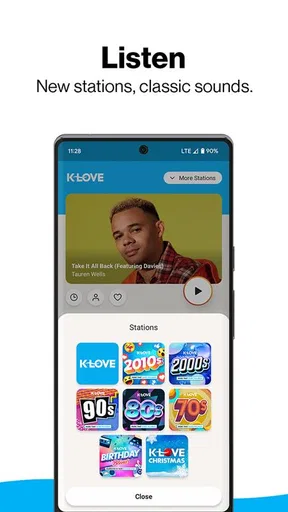
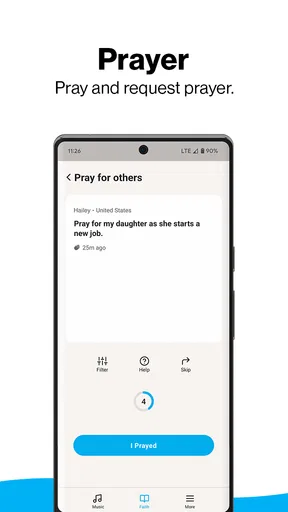
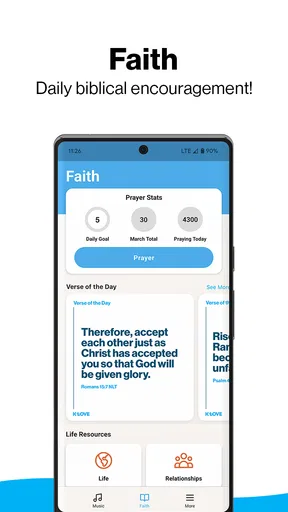
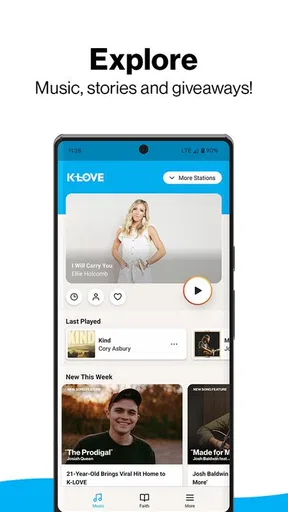
 Analysis by AppCompare
I installed K-LOVE expecting a straightforward way to keep Christian radio close at hand, and that is exactly where this free Music & Audio app makes the most sense. It is not a studio for producing songs, an editor for trimming recordings, or a publishing tool for creative projects. Instead, it works as a listening companion: something I can open when I want music and encouragement without building a queue from scratch.
That distinction matters. If your creative routine begins with finding the right atmosphere for writing, planning, journaling, commuting, or simply settling down after a busy day, a focused radio app can be useful. If you are looking for detailed control over tracks, offline libraries, audio editing, or distribution, this is not the right kind of tool. My experience with it was strongest when I treated it as a reliable starting point for listening rather than as an all-purpose music platform.
Starting a listening session without overthinking it
The main appeal is immediate access to K-LOVE programming. The app’s purpose is easy to understand, and that simplicity reduces the small decisions that often get in the way of listening. I do not have to spend time assembling an elaborate playlist before beginning a writing session or choosing background audio for a drive. I can open the app, start listening, and let the station shape the mood.
That makes it particularly suitable for people who prefer radio-style discovery. With a conventional streaming service, I usually need to decide between an album, artist, playlist, station, or recommendation mix. Those choices are helpful when I want control, but they can also become a distraction. K-LOVE takes the opposite approach: it gives me a defined listening identity, which is useful when I already know the kind of programming I want.
I found this especially practical during an ordinary morning routine. While preparing breakfast and getting ready for work, I could use the app as a low-effort audio companion instead of searching through several services. Later, during a quiet writing block, the same approach helped me begin without spending the first few minutes managing music. The real creative benefit is reduced setup friction, not advanced production power.
The app is developed by Educational Media Foundation, and its focus is reflected in the experience. It feels designed around bringing the K-LOVE listening experience to a phone rather than turning the phone into a complicated audio workstation. That narrow purpose is a strength for listeners who value familiarity, but it can feel restrictive to anyone who wants a broad catalog or highly personalized control.
Who benefits from the radio-first approach
I would recommend it first to listeners who want Christian music and radio programming in a dedicated app. It can also suit people who need a dependable audio backdrop for reflective activities, household tasks, commuting, or casual creative work. Writers, students, and people who journal may appreciate having a consistent source of sound when silence feels too stark but a carefully curated playlist feels like unnecessary work.
Worth Reading Before You Choose

EA SPORTS FC Mobile 26 Is a Bigger Football Game, but It Takes Time

Flipboard Shows What News Apps Must Do Beyond the Feed

Switching to Android Auto Means Rethinking Your Driving Routine

Google Calendar Makes a Crowded Week Easier to Manage

Ludo King Makes the Most of the Minutes Between Plans

Baby Panda World Brings Quick Play to Modern Phones, but Its Game Library Feels Busy
It is less suitable for someone whose idea of listening involves building a precise sequence of songs, comparing multiple genres, downloading albums, or controlling every transition. A general streaming service will usually be the better choice for those needs. Likewise, musicians who want to record demos, edit vocals, arrange tracks, or send finished work to collaborators should look elsewhere entirely. K-LOVE can help set a mood before making something, but it does not replace a digital audio workstation or a file-sharing workflow.
The app is free, which removes a major barrier to trying it. It is also rated for Everyone, so its broad accessibility is part of its appeal. On Android, the listed minimum operating system is Android 5.0, allowing it to remain relevant to people using older compatible phones. I still recommend checking how smoothly any audio app behaves on your specific device, especially if the phone has limited memory or an older version of its system.
How I used it during the making process
Although this is not a creation app, I tested it as part of a simple creative workflow: choose a task, start the station, work for a while, and decide whether the audio helps or distracts. That is a more honest way to judge it than pretending it offers editing or publishing functions. Its role is upstream of the actual making process. It helps establish an environment in which I can write, sketch ideas, organize notes, or complete repetitive work.
For focused writing, I preferred starting the audio before opening the document. That small order of operations prevented me from interrupting the first few minutes of work to search for something to play. For household projects, I used it more casually, allowing the programming to fill the room while my attention moved between tasks. The app works better in these situations than when I need exact musical timing or a carefully controlled emotional arc.
One useful trade-off became clear: radio can support momentum because it removes choice, but it can also interrupt concentration when spoken segments or changes in energy pull my attention away. If I am drafting something that requires close reading or delicate wording, I sometimes prefer silence or instrumental audio from another service. K-LOVE is more convincing for routine creative work, brainstorming, planning, and transitions than for every stage of deep concentration.
I also found that the app can function as a reset button between tasks. Rather than carrying the pressure of one unfinished project into the next, I can start a listening session while clearing my desk or taking a short break. The value is not a hidden editing feature; it is the way a dedicated listening destination can create a boundary around work. That is a subtle but practical use case for anyone who struggles to move from one activity to another.
What to expect while listening
People often ask whether a radio-focused app behaves like a normal on-demand music library. I would not approach it with that expectation. Its appeal is the stream and the identity of the station, not the promise of selecting any specific song whenever I want. If choosing a particular track is essential to your workflow, you will likely find the experience less flexible than a subscription music service or a personal library.
That limitation can actually be helpful when I want to avoid decision fatigue. I do not have to decide whether today calls for one artist, a themed playlist, or a particular album. The station supplies continuity. For a long drive or a work session, that can feel more natural than repeatedly managing a queue. For a carefully timed video project, podcast edit, or presentation, however, I would use a different tool because radio programming is not designed to provide predictable, reusable audio assets.
Another practical point is that I would not treat the app as a replacement for a creator’s source files. If I am preparing something for publication, I need music and recordings that I have the right to use, plus control over the final mix. Listening to K-LOVE may influence an idea or provide energy during preparation, but it does not create an exportable soundtrack or a handoff package for a client.
Iteration: adjusting the role instead of forcing the app
My best results came from changing how I used the app rather than expecting it to change into something else. At first, I tried leaving it on during every kind of work. That was not ideal. When I was proofreading, strong vocal moments and spoken transitions competed with the text. When I was organizing files or outlining ideas, the same audio felt more supportive. The lesson was simple: use it during stages where atmosphere matters more than precise attention.
For a creator, this means separating the exploratory stage from the finishing stage. During brainstorming, I can tolerate unpredictability because I am generating possibilities. During revision, I need fewer interruptions and more control. K-LOVE fits the first stage better than the second. It can help me get moving, but it should not be the only audio option in a workflow that includes detailed editing or quality checks.
I also recommend testing the app at different listening volumes. At a low level, it can sit behind routine work without demanding much attention. At a higher level, the programming becomes more prominent and may be better for cleaning, driving, or taking a break. This is not a technical feature, but it is a useful habit: the same app can either support concentration or compete with it depending on how deliberately I set the listening environment.
When the experience feels too passive, I switch tasks instead of fighting the format. I might use the station while collecting references, writing a rough outline, or preparing a workspace, then move to silence or another audio source for the final wording. That workflow preserves the app’s strongest quality—easy access to a familiar stream—without asking it to provide the control of an on-demand library.
Where the friction shows up
The narrow focus is the main limitation. People who expect playlists, personal music management, audio downloads, or editing controls may open the app and feel that it does not go far enough. That is not necessarily a flaw in its intended role, but it does affect the buying decision even though the app itself is free. Free access is valuable only if the listening model matches your habits.
I would also avoid relying on it as the sole solution for every environment. A radio stream is naturally less predictable than a saved collection, and creative work sometimes requires a stable sound bed. If I am recording narration, editing a short film, or preparing a presentation, I need a clean and controllable audio source. In those situations, I would use dedicated production software and keep this app for inspiration or background listening.
Another limitation is conceptual rather than technical: the app does not turn passive listening into a complete creative archive. I cannot use it as a place to store drafts, manage versions, or hand work to another person. Someone looking for a single app that covers idea capture, production, revision, and delivery will be disappointed. Its value is more modest and more specific, which is why it works best as one part of a broader routine.
Handoff and publishing: know where this app stops
The handoff stage is where the difference between a listening app and a creative production tool becomes impossible to ignore. If I finish a written piece, recording, design, or video, K-LOVE does not serve as the place where I package that work for a client, upload it, or manage its revisions. I would move the finished material through the appropriate writing, editing, storage, or publishing service instead.
That does not make the app irrelevant to delivery. It can be useful before a handoff, especially when I need to step away from a screen and review the overall direction of a project mentally. A walk with familiar radio programming can help me decide whether an idea still feels right before I send it onward. I see that as a reflective checkpoint, not as an export function.
For teams, the boundary is even clearer. A collaborator cannot use this app to inspect versions, leave notes, approve changes, or receive a final asset. If your workflow depends on those actions, choose tools built for collaboration and publishing. K-LOVE belongs earlier in the process, where it can support mood, routine, and mental reset.
This honest boundary is useful for new users. Install it for listening, not for making promises about production. The app can accompany the work, but it does not own the work. Once I understood that, I stopped judging it by features it was never meant to provide and started evaluating whether its focused radio experience improved my day.
What the community response suggests
The app has passed one million installs, with an average rating of 4.6 from around twenty-two thousand ratings and roughly six thousand four hundred written reviews. Those figures suggest that many people find the focused experience worthwhile, while the written feedback volume also indicates an active audience willing to describe how it fits into daily listening.
I would not treat the rating as a guarantee that it will suit everyone. A strong average can tell me that the central idea works for many listeners, but it cannot remove the personal trade-off between radio and on-demand control. Someone who wants a simple K-LOVE listening destination may be very satisfied; someone expecting a complete replacement for a large streaming catalog may not be.
The app has been available since February 11, 2013, which gives it a long presence compared with many short-lived mobile audio experiments. Its current version is 8.1.21, and that continued versioning is reassuring for users who want an established app rather than a temporary companion. I still judge any update by how well the current experience fits my needs, not by longevity alone.
My verdict for everyday listeners and creators
After using it as both a daily listening app and a support tool around creative work, I see K-LOVE as a focused, approachable choice for people who want K-LOVE programming on a phone without paying for access. Its strongest quality is that it gives me a clear place to begin listening. I can use it during a commute, while doing chores, before journaling, or at the start of a low-pressure work session without constructing a complicated audio plan.
I would recommend it to a friend who enjoys Christian radio and prefers discovery through a station rather than selecting every song manually. I would also recommend it to a writer or maker who needs a familiar audio environment for brainstorming and routine tasks. The free price and Everyone age rating make trying it easy, and Android users with version 5.0 or later can consider it within the listed compatibility range.
I would skip it if my priority were music ownership, offline access, exact song selection, multitrack recording, audio cleanup, version control, or publishing. In those cases, a full streaming catalog, personal media manager, or dedicated creative suite would be a better match. K-LOVE can sit beside those tools, but it cannot replace them.
My final opinion is positive, with a clear condition: use K-LOVE as a focused listening companion, not as a production platform. When I respect that boundary, the app is easy to understand and genuinely useful. It helps me start the day, fill ordinary tasks with sound, and create a more intentional transition into reflective or creative work. That modest role is also its most convincing one.
Pros
- Positive Christian music and messages create an uplifting listening experience.
- Live radio and on-demand content make it easy to listen throughout the day.
- Curated playlists help users discover faith-based artists and songs.
- Station updates and devotional content add value beyond standard music streaming.
- Simple navigation lets listeners quickly find music
- shows
- and podcasts.
Cons
- The Christian-focused catalog may not appeal to listeners seeking broader music genres.
- Some features or content may require an internet connection while traveling.
- Frequent faith-based messaging can feel repetitive for occasional listeners.
- Audio quality and playback may depend on network strength and device settings.
- Availability of certain features or stations can vary by location.
FAQs for K-LOVE
What is K-LOVE, and what can I use the app for?
K-LOVE is a Christian radio and music app focused on positive, faith-based programming. After installing it, users can typically listen to a live K-LOVE stream, discover contemporary Christian songs, read inspirational content, and stay connected with the station. Availability of specific features may vary by country, device, and the current version of the application.
Does the K-LOVE app require a subscription or payment?
The K-LOVE app is generally available to download and use without purchasing a mandatory subscription. However, it may include optional donation opportunities or links to support the K-LOVE ministry. Listening to radio content is usually free, but mobile data charges can apply when streaming over a cellular connection. Always review the store listing for the latest pricing and in-app purchase details.
Can I listen to K-LOVE without an internet connection?
K-LOVE is primarily a streaming application, so a reliable Wi-Fi or mobile-data connection is normally required for live radio and online content. The app may not provide offline downloads for its full station stream or music library. If you plan to listen while traveling, check your connection beforehand and consider using Wi-Fi to reduce mobile-data consumption.
What kind of content is available on K-LOVE?
The app centers on contemporary Christian music, encouraging messages, artist-related content, and radio programming designed for listeners seeking faith-based entertainment. Depending on the current app version, you may also find station information, devotional material, news, event details, or ways to interact with the K-LOVE community. Content and regional availability can change over time.
Is K-LOVE suitable for children and families?
K-LOVE is generally designed around positive Christian music and family-friendly radio programming, making it suitable for many households. Nevertheless, parents should review the app’s privacy settings, advertising or external links, and any available age rating before allowing children to use it independently. Since programming can change, parental supervision is recommended for younger listeners.


